Gas Receipt Generator
Set the station, pump and payment references, then enter subtotal and tax amounts. Check the calculated total or use the optional total override when your record needs it.
Last updated
A compact layout with editable amount captions
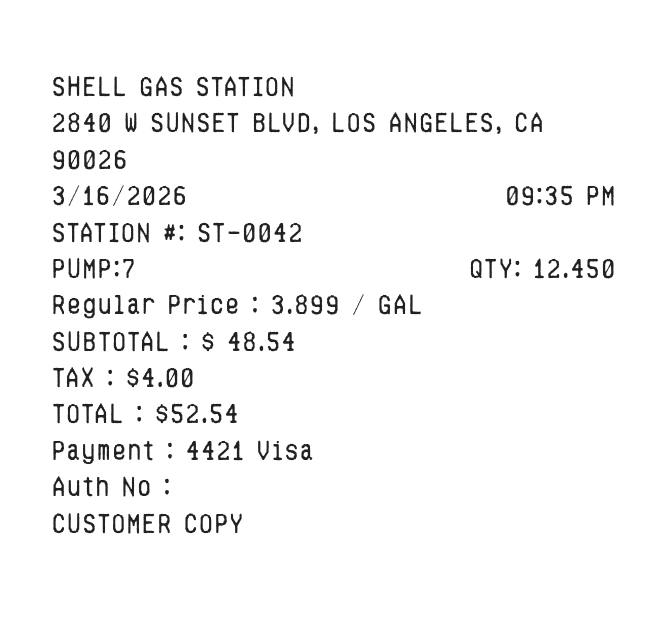
This gas receipt shows the station and pump above quantity and unit-price references. Its amount controls are separate: you enter the subtotal and tax as money values, and the total uses their sum unless you supply an override. Captions can be edited alongside the receipt details.
What a gas receipt records and the taxes in the price
A gas receipt usually records the station, the date and time, the pump, the gallons pumped, the price per gallon and the total paid. Fuel taxes are already built into that pump price. The U.S. Energy Information Administration lists taxes as one of the components of the retail price of gasoline, alongside crude oil, refining, and distribution and marketing. The federal tax on gasoline is 18.4 cents per gallon, made up of an 18.3-cent excise tax and a 0.1-cent Leaking Underground Storage Tank fee. As of January 2026, state taxes and fees on gasoline averaged 33.55 cents per gallon, so the amount varies a lot from state to state.
Gas receipts matter most if you deduct car costs for work. The IRS lets you choose between actual car expenses, which include gas, oil, tolls, parking, repairs and insurance, and the standard mileage rate. If you use the standard mileage rate for a year, you can't also deduct gasoline, including gasoline taxes. For 2026, the business rate is 72.5 cents per mile from January 1 through June 30 and 76 cents per mile from July 1. With mixed business and personal driving, the IRS says to split actual costs by miles, so 12,000 business miles out of 20,000 means 60% of the costs.
Keeping gas receipts for expense and mileage records
Pay-at-the-pump purchases can involve a card hold. The Consumer Financial Protection Bureau has warned that a pre-authorization can temporarily hold more money than the transaction amount, and suggested paying the attendant in advance to avoid it. Keep the pump receipt so you can match the final fuel amount to your statement once the hold clears.
For tax records, the IRS sample daily log tracks the date, destination, business purpose, odometer readings and expenses such as gas, oil and tolls. Keep receipts that support a deduction for 3 years from the date you file the return.
Fields in the gas receipt editor
| Section | Details |
|---|---|
| Station | Name, address and station code |
| Purchase | Date, time and pump number |
| Fuel notes | Quantity, per-gallon price and their captions |
| Amounts | Subtotal, tax amount and optional total override |
| Payment | Method, card last four digits and authorization text |
Related receipt guides
Check the fuel notes against the amounts
- Replace the station, pump and date examples.
- Enter the quantity and unit-price references.
- Set subtotal and tax as separate money amounts.
- Leave Total override blank for their sum, then review payment.
FAQs
Official sources
- U.S. EIA - Factors affecting gasoline prices
- IRS - Publication 463, Travel, Gift, and Car Expenses
- IRS - Standard mileage rates
- CFPB - Using a prepaid card without paying a fee (gas pump holds)