Sold As Seen Receipt Template
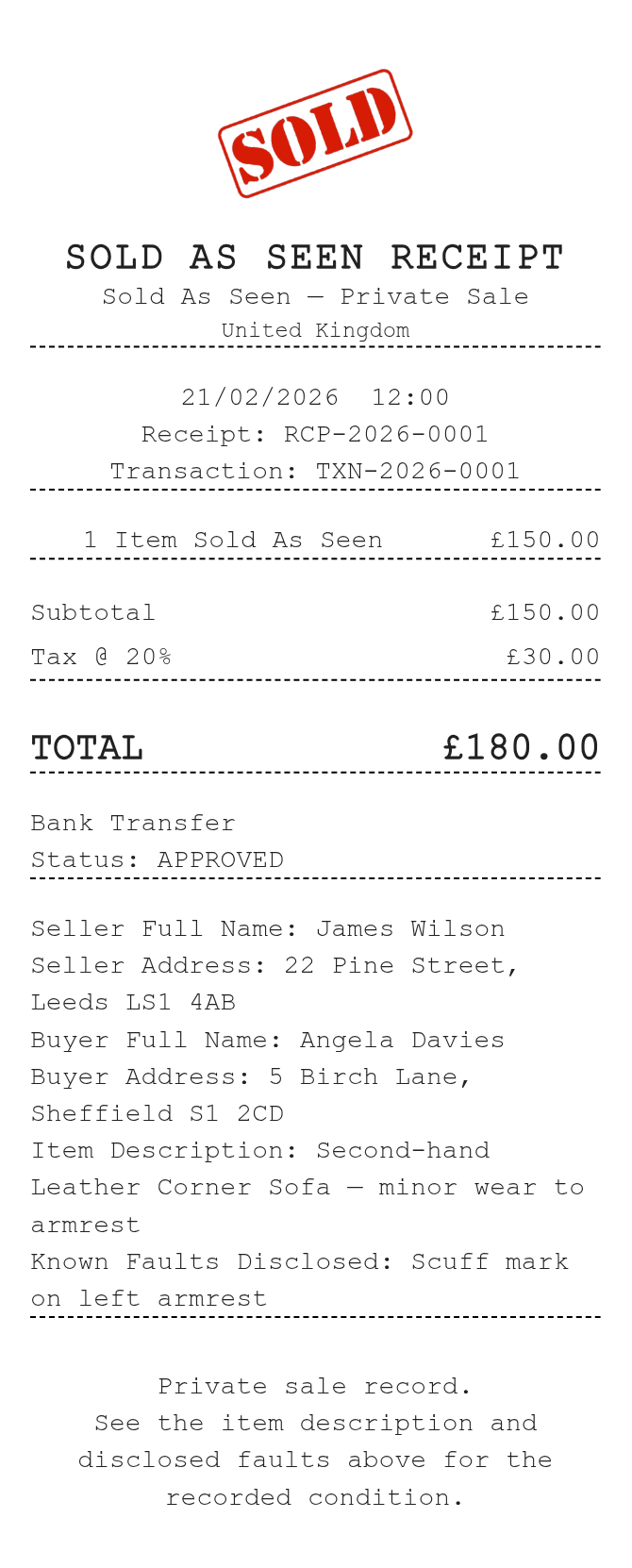
Record a private sale with buyer and seller details, the item description and known faults. Use specific condition notes and check the payment amount before downloading.
Last updated
Put the known faults in writing
The useful part of a sold as seen receipt is the description of the item at handover. This template gives Known Faults Disclosed its own field, separate from the item description. Write what the parties discussed, such as a scuffed sofa arm or a missing accessory, rather than relying on a general condition phrase.
What sold as seen means for a trader's sale
When a business sells to a consumer in the UK, the Consumer Rights Act 2015 treats every contract to supply goods as including a term that the goods are of satisfactory quality. Section 9(4) says that term does not cover a problem specifically drawn to the consumer's attention before the contract is made, or one that an examination the consumer actually made ought to have revealed. That is why a precise list of disclosed faults on a sold as seen receipt matters far more than the phrase itself. Section 31 makes a contract term non-binding on the consumer to the extent that it would exclude or restrict the trader's liability for quality, fitness for purpose or goods matching their description.
GOV.UK guidance for businesses says customers have the same rights in a sale as at full price, and that it is illegal to restrict or take away customers' rights or mislead them, for example with a sign saying no returns or refunds. For items bought in person, a trader does not have to refund a customer who knew an item was faulty when they bought it. If a customer returns a faulty item within 6 months, the trader must repair or replace it unless it can prove the item was not faulty when the customer bought it. Online and phone sales also carry a 14-day right to cancel.
Private sales and sold as seen receipts
A sale between two private individuals falls under the Sale of Goods Act 1979 rather than the consumer rules in the 2015 Act. Section 13 implies a term that goods sold by description will correspond with that description. The satisfactory quality term in section 14(2) applies only where the seller sells in the course of a business, so a private seller's main written commitment is usually the description itself.
Write the description and known faults plainly, record the price, date and payment method, and give each party a copy. Keep any advert, messages and photos with the receipt.
Make the sale identifiable
| Section | Details |
|---|---|
| Seller and buyer | Enter both names and addresses. |
| Item description | Identify the item and any relevant model or serial number. |
| Known faults | Describe the faults disclosed during the sale. |
| Amount | Record the agreed amount received. |
| Payment | Enter the method and a useful transaction reference. |
Related receipt guides
Keep condition notes factual
- Keep any inspection notes, photographs and written sale agreement with the receipt. This editor records the payment and condition text you enter.
- The phrase sold as seen does not establish a blanket waiver. UK government guidance says traders must not restrict or mislead consumers about their refund rights.
FAQs
Official sources
- GOV.UK: accepting returns and giving refunds
- Consumer Rights Act 2015, section 9
- Consumer Rights Act 2015, section 31
- Sale of Goods Act 1979, section 13
- Sale of Goods Act 1979, section 14
- GOV.UK - Accepting returns and giving refunds: the law