Private Sale Receipt Template
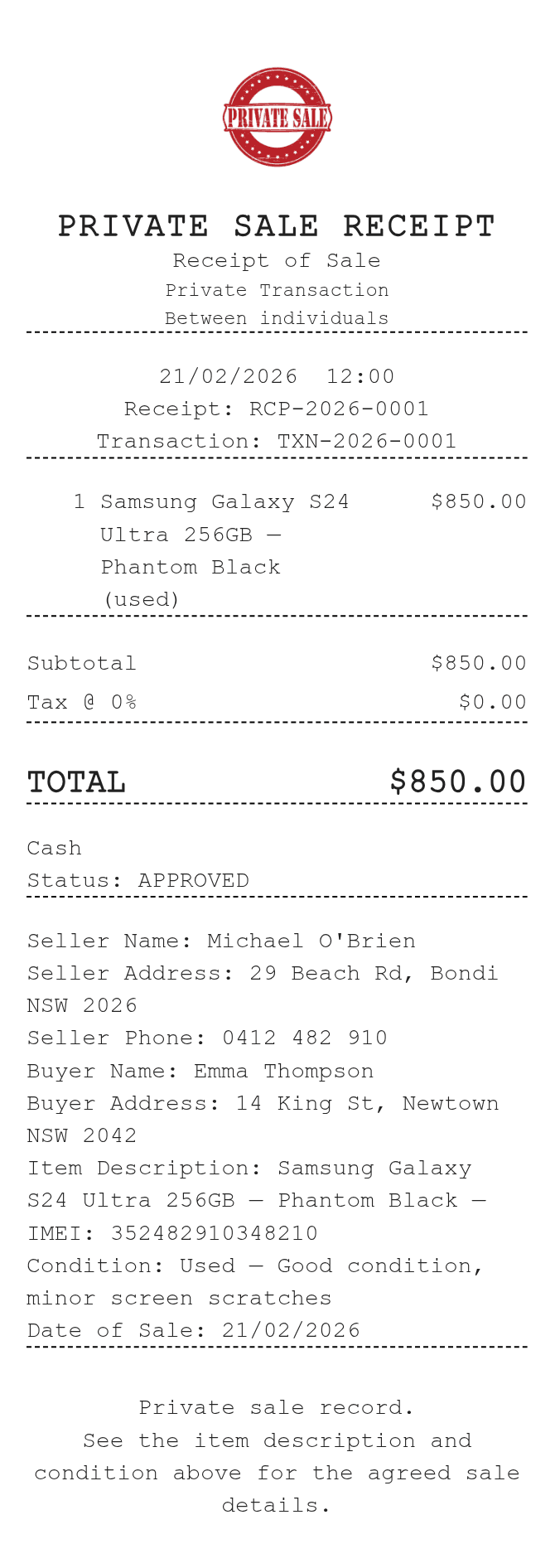
Write a record of a sale between individuals, with buyer and seller details, the item condition and the amount paid. Edit the example, then download a copy.
Last updated
Describe the item you handed over
A private sale receipt is easier to match to a purchase when it identifies the actual item. This layout gives you separate spaces for the item description and condition, alongside both parties and the sale date. For a used phone, for example, record the model and an appropriate device reference, then describe the wear that was discussed.
What a private sale receipt covers in Australia
The ACCC says most consumer guarantees don't apply to one-off sales between 2 people where the seller isn't running a business. Garage sales, fetes and individuals selling through Gumtree or Facebook Marketplace are its examples. Three guarantees still apply to these private sales: title to the product, undisturbed possession, and no hidden debts or charges. Because the buyer can't use the other guarantees to claim a refund for a fault, a private sale receipt that records the agreed condition, the price, the date and both parties is often the main evidence of what was agreed.
For anything valuable, the Personal Property Securities Register (PPSR) suggests a search before you pay. Any high-value goods that are not land, fixtures or fittings could have a security interest registered, which may mean money is still owing. Its examples include motorbikes, golf carts, jet skis, boats, trailers, caravans, jewelry and artworks. If you buy goods with a registered security interest without searching, you risk repossession even though you paid. You can search by serial number for some property, or by the seller's details, and the certificate you receive shows whether a security interest was registered at that time.
Keeping private sale records for tax and disputes
Each party should keep a copy of the private sale receipt with any PPSR certificate, listing photos and messages. On tax, the ATO says selling unwanted personal items that you originally bought for private use, rather than for resale, will generally not result in assessable income. That changes if you regularly buy goods to resell: even when the activity is not a business, the ATO says amounts received may still be assessable and need to be declared.
If your selling does amount to carrying on a business, the ATO says you must declare the income, keep appropriate records and meet registration obligations such as an ABN and GST where they apply.
Complete the sale details
| Section | Details |
|---|---|
| Seller | Enter the seller name, address and contact number. |
| Buyer | Record the buyer name and address. |
| Item | Include the make, model and relevant identifier in the description. |
| Condition | Describe known wear or damage in plain language. |
| Payment | Record the amount received and the payment method. |
Related receipt guides
Make the two descriptions agree
- The item row and the separate Item Description field can both appear on the receipt. Check that they refer to the same item after editing.
- Use the footer for additional sale notes. Keep any signed agreement, messages and condition photographs with this payment record.
FAQs
Official sources
- ACCC - Consumer rights and guarantees (private sales)
- PPSR - PPSR and high-value goods
- PPSR - Fees for using the PPSR
- ATO - Are you in the business of online selling?