Vehicle Sale Receipt Template
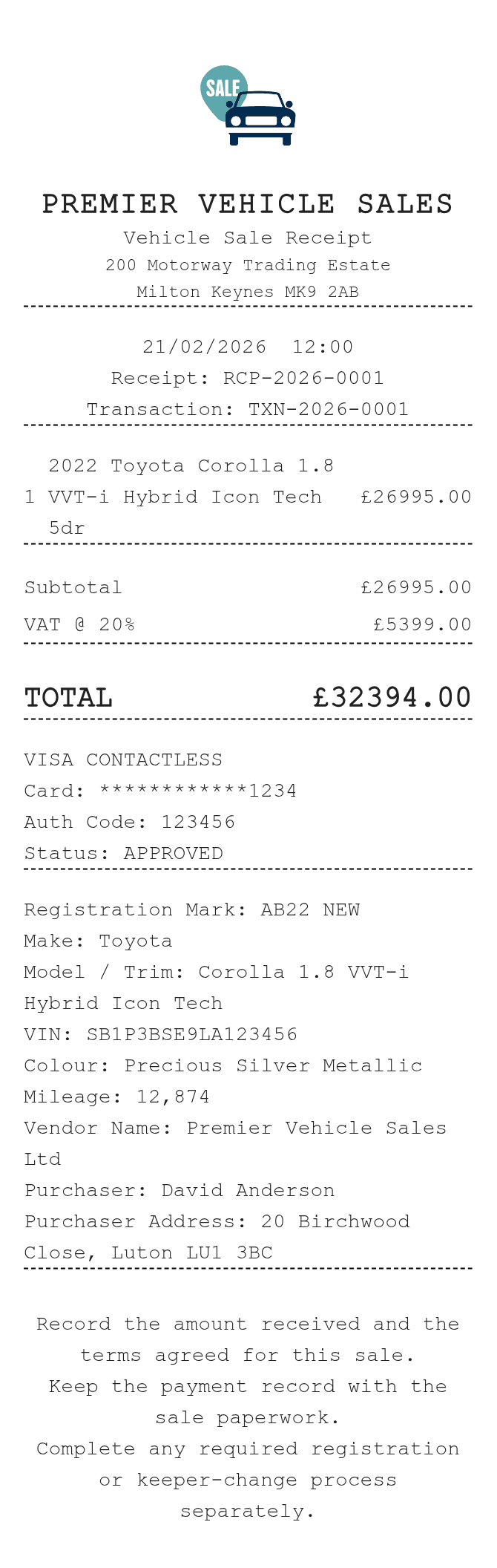
Create a vehicle payment record with seller, buyer, registration and VIN details. Review the amount received and keep the download with the sale paperwork.
Last updated
Identify the vehicle and the payment it relates to
Use this layout when you need the seller’s name and the buyer’s name and address alongside the vehicle registration, make, model, VIN, color and mileage. The header, description and footer are editable, so the receipt can refer to the separate sale agreement or invoice used for the transaction.
What a UK vehicle sale receipt should record
A vehicle sale receipt is the written record of what changed hands and for how much. In the UK it works alongside the log book (V5C), not instead of it. Trading Standards advises buyers never to buy a vehicle without the V5C and to check that the VIN and engine number on it match the vehicle. Recording the registration, make, model, VIN and mileage on the receipt ties the payment to that specific vehicle. Note whether the amount is a deposit or the full price, how it was paid, and the date of sale, because DVLA asks for the exact date of sale when a sale is reported by post.
Who the seller is matters too. Buying from a dealer or trader gives better legal protection: the car must be as described, of satisfactory quality and fit for any stated purpose. Buying privately gives fewer rights, and you can't expect satisfactory quality or fitness for purpose unless the seller said so, though you can claim if the seller misrepresented the car's age or mileage. Trading Standards also says any agreed extras, such as repairs promised before collection, should be written into the sales invoice, and that the advert description can be stated as part of the contract.
Paperwork to keep with a vehicle sale receipt
Give the buyer the green new keeper slip from the log book, then tell DVLA you've sold the vehicle with the buyer's full name and address. The online service runs Monday to Friday, 7am to 9pm, and weekends, 7am to 8pm. Vehicle tax is not transferred to the buyer: it's canceled when DVLA is told, and the seller can claim a refund for full months left.
Keep a copy of the advert, the vehicle sale receipt and all other documents for future reference. Sellers can show the log book to buyers, but GOV.UK warns not to share its document reference number or photos of it.
Information you can enter
| Section | Details |
|---|---|
| Seller | Business/contact header and a separate seller-name field |
| Buyer | Name and address |
| Vehicle | Registration, make, model, VIN, color and mileage |
| Amount received | Item description, full line amount, tax percentage and payment |
| Receipt references | Date, receipt number, transaction number and notes |
Related receipt guides
Make the payment description unambiguous
- State whether the recorded amount is a deposit, installment or final payment.
- Enter the full amount for each row; quantity is descriptive in this layout.
- Check Tax% before downloading. The editor applies it to the subtotal and does not determine the rules for a particular sale.
- Keep the receipt alongside the agreement and complete any required keeper or registration change through the relevant authority.
FAQs
Official sources
- UK vehicle keeper-change service
- GOV.UK - Tell DVLA you've sold, transferred or bought a vehicle
- GOV.UK - Selling a vehicle
- GOV.UK - Get a vehicle log book (V5C)
- Devon, Somerset and Torbay Trading Standards - Buying a second-hand vehicle
- nidirect - Buying a new or used car
Related Templates
- Used car sale with inspection fields
- Car sale layout for Canada
- Vehicle sale layout for Australia
- Victoria Vehicle Sale Receipt
- Window Tint Service Receipt
- Big O Tires Receipt
- Car Service Receipt
- Discount Tire Service Receipt
- Impound Receipt
- Midas Receipt
- Firestone Receipt
- Cobblestone Receipt
- Towing and Roadside Receipt
- Autozone Receipt