CarMax Appraisal Offer Template
Edit an appraisal-style layout with vehicle information, offer references and an amount. Review the example sections and download a PDF or PNG; this tool does not obtain a CarMax offer.
Last updated
An editable appraisal layout
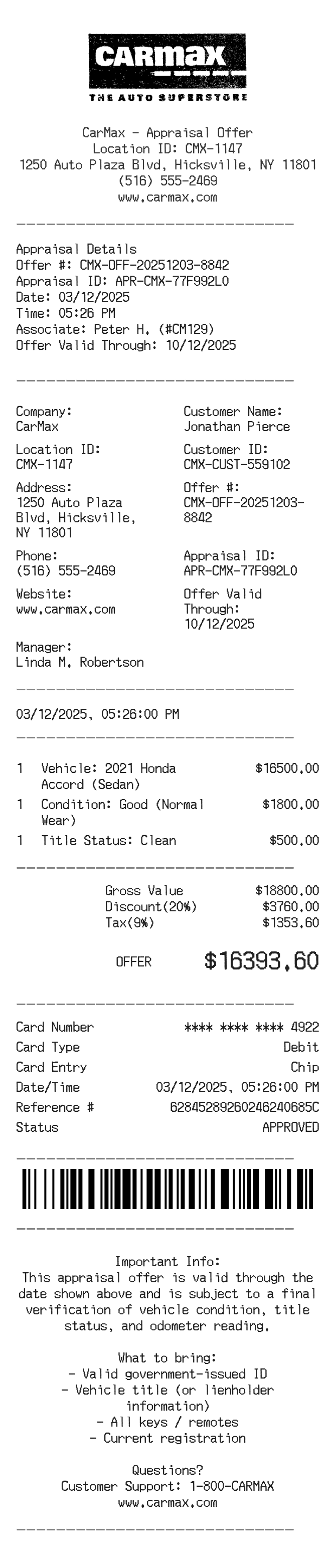
The CarMax template is arranged around an appraisal offer rather than a completed vehicle purchase. It contains an offer number, appraisal ID, validity text and a vehicle-value section. You can change the section labels and values for a sample or a clearly identified copy of information you already have.
What a CarMax appraisal offer means
A CarMax appraisal produces a written offer, not a sale. CarMax says its offers, made online or in a store, are real offers valid for 7 days, and they are firm, so they can't be negotiated. The offer is the same whether or not you buy a car from CarMax, and it is based on the VIN, odometer reading, vehicle history and overall condition. It also depends on the information you gave being accurate. When you bring an online offer to any CarMax store, staff verify the car's condition, use and history, and CarMax says some offers are adjusted after that check.
The paperwork comes when you accept. In a store, CarMax asks for the title or payoff information, a valid and current registration, valid state-issued photo ID for all titleholders, and all keys and remotes, and requirements vary by state. If you still owe money, CarMax contacts the lender to arrange the payoff. If the payoff is more than the offer, you pay the difference: stores take cashier's checks, certified funds, cash and debit cards, and a personal check when you owe less than $250. Once the offer is accepted and the paperwork is in order, CarMax issues a bank draft on the spot.
Keeping records after you sell to CarMax
Keep the written offer until its 7-day window closes, and keep the sale documents and bank draft details once you sell. Selling to a dealer may not end your own paperwork. In California, for example, the DMV says sellers must also submit a Notice of Transfer and Release of Liability within 5 days.
For income tax, the IRS treats a car you own for personal use as a capital asset. A gain on the sale is a capital gain, while a loss from selling personal-use property such as a car isn't deductible. Your purchase records and the sale amount show which applies.
Where the details go
| Section | Details |
|---|---|
| Header | Location name, address and contact text |
| Appraisal message | Offer number, appraisal ID, associate and validity date |
| Two-column information | Customer and location details with editable labels |
| Value rows | Descriptions, quantities, amounts and adjustable summary lines |
| Optional sections | Payment, barcode and footer blocks that can be edited or removed |
Related receipt guides
Keep the document’s purpose clear
- Replace sample references and dates, including any repeated entries in the two-column section.
- Review the value rows and every summary line. The example tax and discount are editable numbers, not CarMax valuation rules.
- Remove a payment section if it would imply a payment that has not happened.
- Check the footer and offer-validity wording. The editor does not verify an offer or extend its validity.
FAQs
Official sources
- CarMax: request an actual offer
- CarMax - Sell my car
- CarMax - How to sell your car to CarMax
- California DMV - Title transfers and changes
- IRS - Topic no. 409, Capital gains and losses