For a health FSA claim, start with records from the pharmacy, medical provider or insurer. A receipt you create yourself does not replace independent evidence of the expense. ReceiptEdit can format information, but it cannot establish medical eligibility or guarantee reimbursement.
This guide explains how to request useful documentation, handle a missing receipt, and keep the distinction between FSA claims and HSA records clear.
What Documentation Does a Health FSA Require?
The IRS requires a statement from an independent third party establishing that a medical expense was incurred and its amount, plus confirmation that another health plan has not already paid or reimbursed it. Some qualifying card transactions use approved substantiation methods without additional paperwork. See IRS Publication 969, Distributions From an FSA.
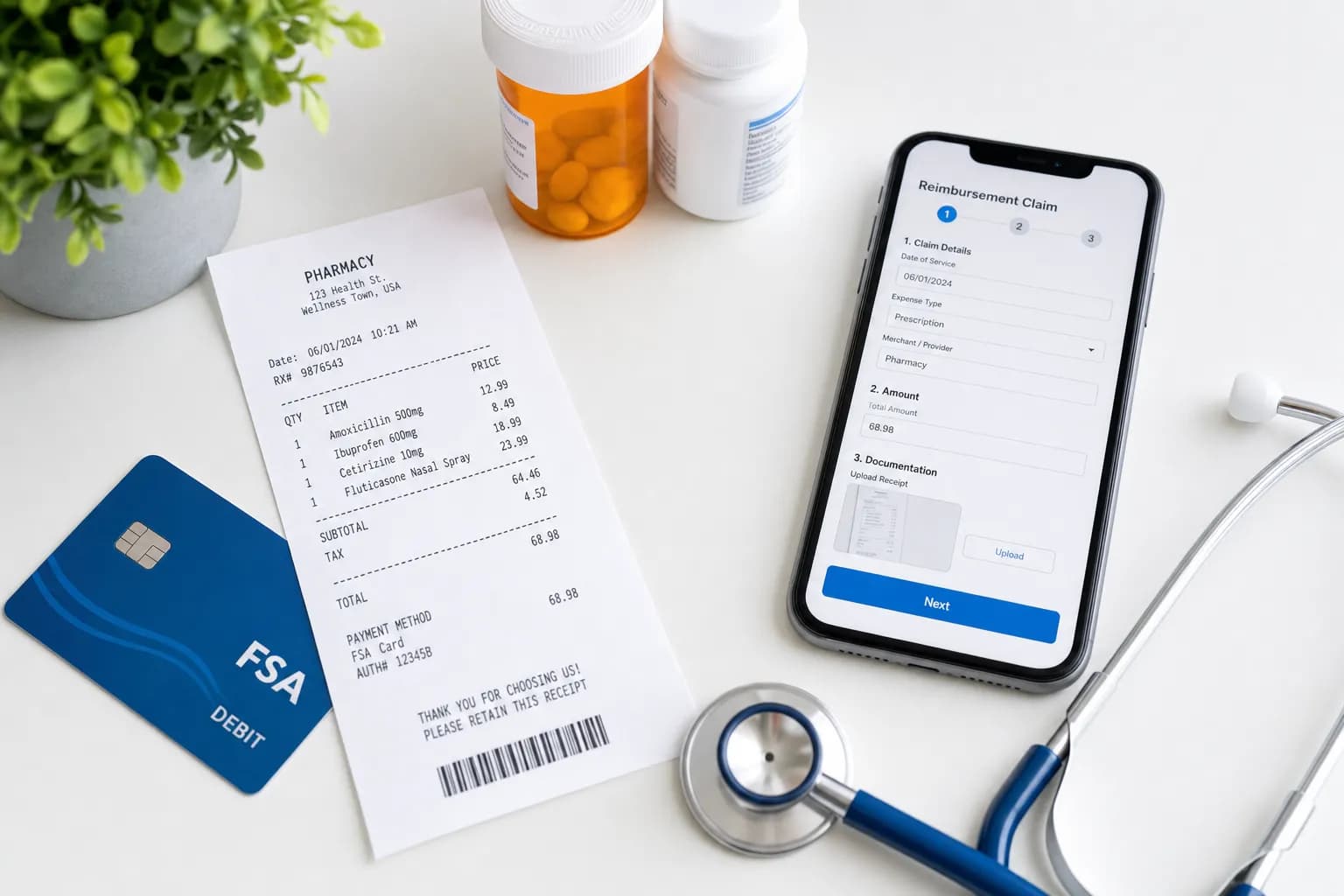
Ask your plan administrator which documents it needs for your particular claim. An itemized provider statement, pharmacy receipt or insurer-issued explanation of benefits (EOB) may provide the necessary information. Acceptance depends on the expense and the plan's review.
Details to Check Before Submitting
Use this checklist when reviewing the documents you already have or requesting a duplicate:
- The patient or person receiving the product or service, where applicable
- The provider or merchant name
- The service date or purchase date
- A description that identifies the medical product or service
- The amount attributable to that expense and any insurance payment
A card statement can help locate a transaction, but a merchant name and total alone do not identify the medical expense. For example, a pharmacy purchase could include both medicine and household supplies. Request the itemized record rather than assigning the entire total to medical items.
Our itemized receipt guide explains the difference between line-item detail and a payment summary.
How to Request an Itemized Record
| Where the expense arose | Record to request | Helpful information to provide |
|---|---|---|
| Pharmacy or retail store | A duplicate itemized receipt or purchase-history record | Purchase date, store location, approximate amount and order reference |
| Medical or dental practice | An itemized statement from the billing department | Patient name and service date |
| Hospital or laboratory | A statement identifying the services and patient responsibility | Account or visit reference |
| Insured treatment | The insurer's EOB, together with any provider record requested by the plan | Claim number and treatment date |
| Online purchase | The seller's final itemized receipt or invoice | Order number and account email |
An EOB usually comes from the insurer; it is not the same document as a provider's bill. Download both when available and ask your administrator which one establishes the amount you may claim.
A practical request is: “Please send an itemized copy of my record for [date], showing the product or service and the amount charged to me.” Use the merchant's own account portal or billing contact. Avoid sending full payment-card details in ordinary email.
What If the Original FSA Receipt Is Lost?
- Check your existing records. Search email, your merchant account, patient portal and insurance portal.
- Ask the issuer for a duplicate. Provide enough transaction information to help it locate the record. Availability and retention periods vary.
- Contact the administrator if no duplicate is available. Describe what independent records you have and ask what additional evidence it requires.
- Keep reconstructions separate. A personal note can organize dates and amounts, but identify it as a reconstruction and retain the evidence used to prepare it.
Do not present a self-created receipt as a pharmacy- or provider-issued original. ReceiptEdit does not verify purchases. A generated layout, bank charge and your own statement do not automatically establish FSA substantiation. The IRS discusses the limits of self-certification in Notice 2006-69.
What to Do When a Claim Is Rejected
Read the reason given before changing any document. If a date, description or amount is missing or wrong, request a corrected record from its issuer. If the plan questions eligibility or insurance reimbursement, ask which supporting document would resolve that question. Keep the rejection notice and the administrator's instructions with your claim.
Medical eligibility can depend on the item, purpose and plan terms. Consult the administrator and the IRS guidance rather than assuming that a familiar store name or a particular receipt format makes an expense eligible.
FSA and HSA Records Are Different
A health FSA reimburses expenses through the plan's claims process. With an HSA, you must keep records supporting qualified distributions, including that the expense arose after the HSA was established and was not otherwise reimbursed or taken as an itemized deduction. See the separate FSA and HSA sections of Publication 969; their procedures are not identical.
Do not delete records merely because a claim was approved or an HSA withdrawal was processed. Keep the supporting records, approval messages and reimbursement history together. Retention depends on the applicable tax and plan requirements; there is no universal seven-year rule for every situation.
A Simple Filing Workflow
- Save the original file or a complete, readable scan.
- Name it with the date, issuer and a short description.
- Keep supporting EOBs and claim correspondence in the same folder.
- Record the amount submitted, any insurance payment and the amount reimbursed.
- Back up the folder and check that you can open the files later.
Where ReceiptEdit Fits
The receipt maker provides editable layouts for recording transaction details. A seller can use a template when issuing an accurate record of its own transaction. A buyer's reconstruction remains a reconstruction, even when it uses a branded layout. Neither the tool nor a tax calculation makes a document “FSA approved.”
Frequently Asked Questions
Can ReceiptEdit replace a missing pharmacy receipt for an FSA claim?
It cannot supply independent evidence from the pharmacy. Request a duplicate or ask the plan which other issuer-provided documents it accepts.
Should I edit a rejected receipt?
If the underlying record is incorrect, ask its issuer for a correction. Do not alter transaction details to match a claim.
Does an itemized receipt guarantee reimbursement?
No. Itemization helps identify the expense, but eligibility and substantiation still need to be reviewed under the plan's rules.