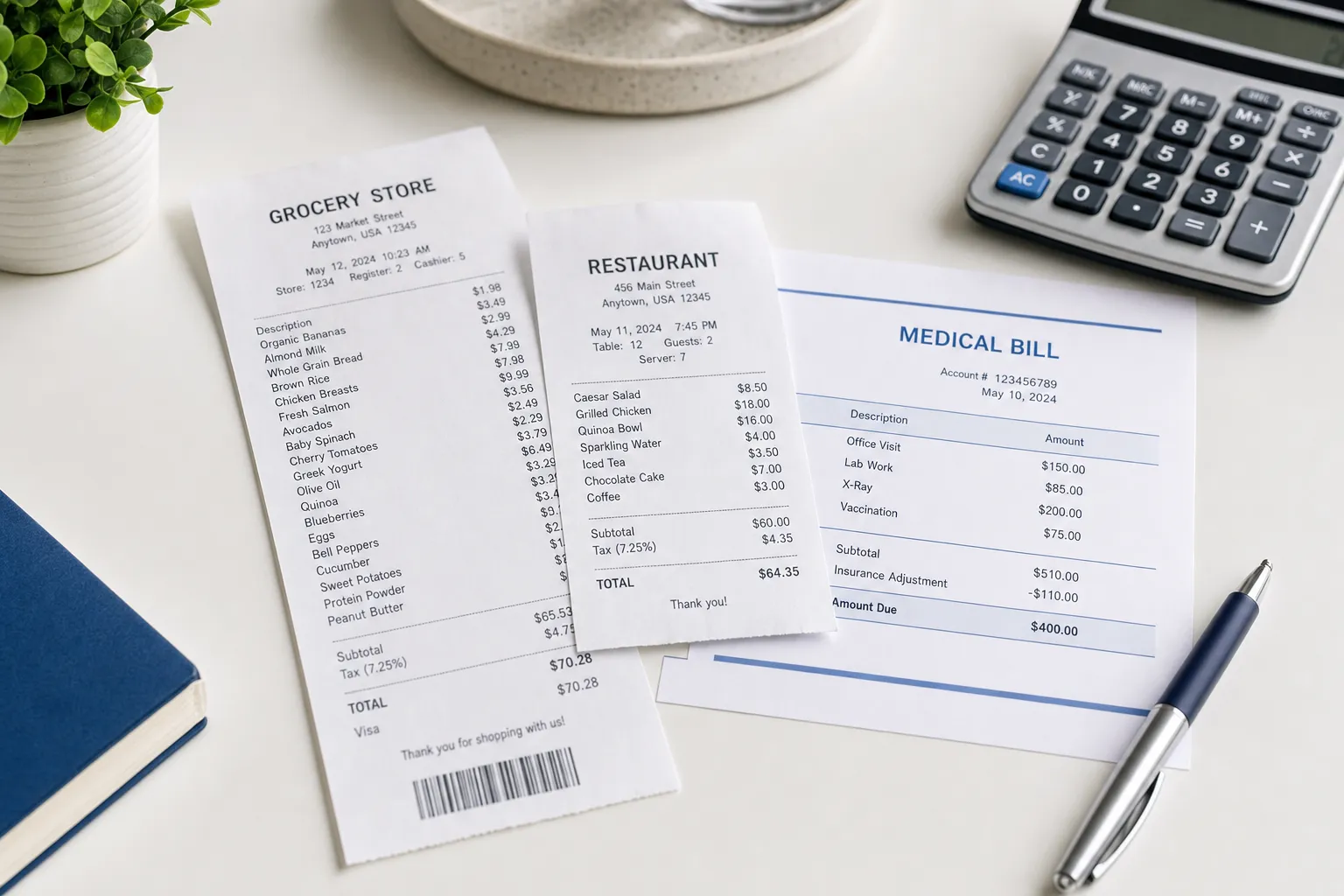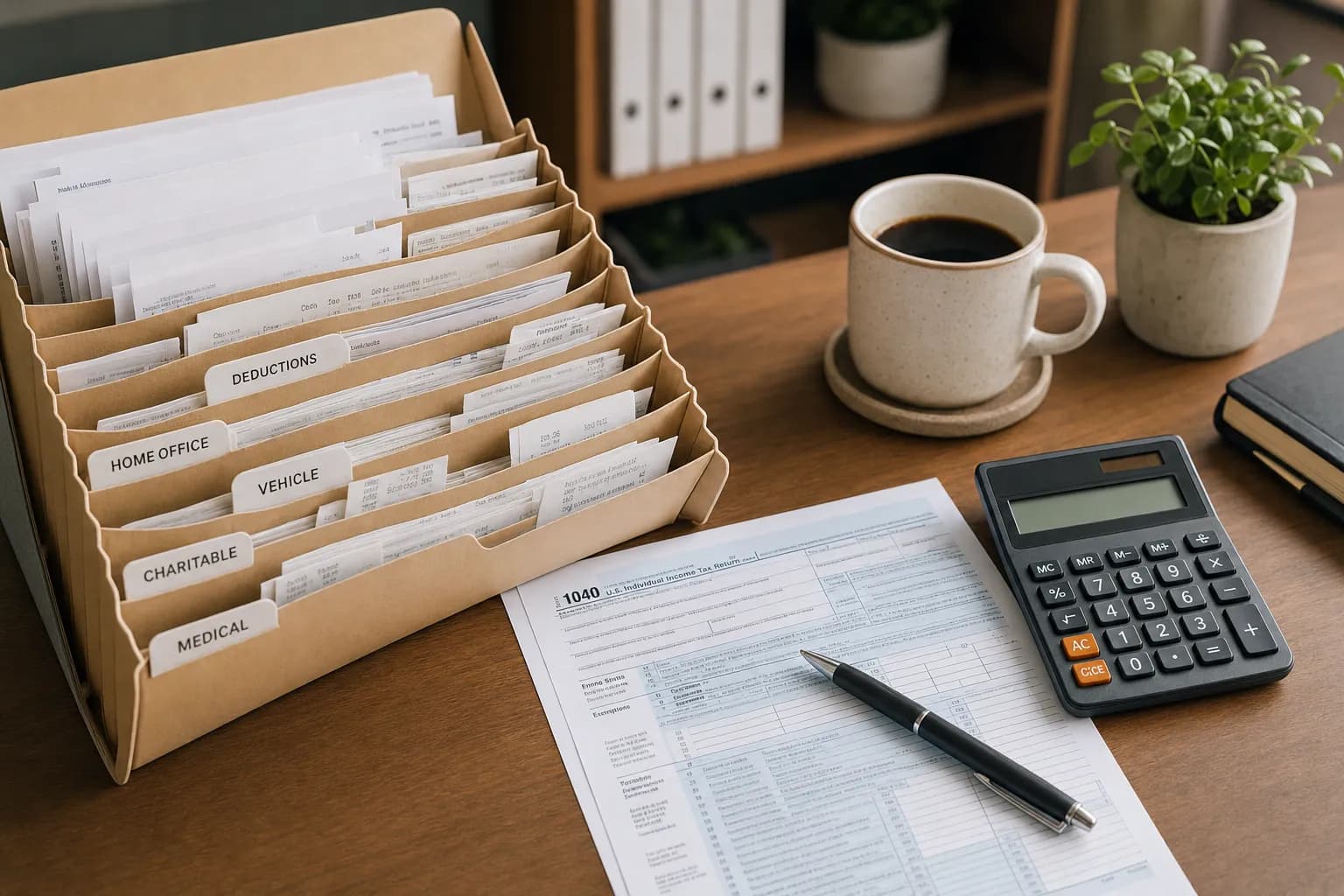
The IRS requires you to keep receipts for business expenses over $75. For expenses under $75, a receipt is not strictly required, but you still need to document the date, vendor, amount, and business purpose. Digital scans of paper receipts count. Records must be kept for at least 3 years from the filing date.
This is the complete guide to IRS receipt requirements: what counts as a valid receipt, the $75 rule, how long to keep records, when digital is fine, and what happens if you lose them. If you need to generate or replace a missing receipt, the receipt generator creates IRS-compliant receipts in under a minute.
What the IRS Actually Requires on a Receipt
The IRS does not have a single "receipt template" requirement, but to qualify as proof of a deductible expense, every receipt must show four pieces of information:
- Date of the transaction
- Vendor name (the business you paid)
- Amount paid (the total)
- Description of what was purchased
A credit card statement showing "Office Depot - $234.56" does NOT meet IRS requirements. It shows you paid Office Depot, but not what you bought. An actual receipt from Office Depot showing "HP LaserJet Toner - $189.99, Copy Paper 10-ream - $44.57" does meet requirements because it describes the purchase. For more detail on what makes a receipt itemized, see our itemized receipt guide.
| Information | Required by IRS? | Why It Matters |
|---|---|---|
| Date of purchase | Yes | Confirms expense was in tax year |
| Vendor name | Yes | Identifies who you paid |
| Description of items/services | Yes | Confirms business relevance |
| Amount paid | Yes | Substantiates deduction value |
| Payment method | Recommended | Links receipt to bank/card record |
| Business purpose notation | Recommended | Adds context if audited |
| Sales tax breakdown | Depends on state | Required for some state filings |
The IRS $75 Rule — Explained
The IRS $75 rule (technically from Publication 463) says you do not need a receipt for business expenses under $75 in three specific categories: meals, lodging incidentals (like tips and laundry), and transportation. For all other expenses, you should keep receipts regardless of amount.
Important caveats most people miss:
- Lodging always requires a receipt, even if under $75. The hotel folio itself is the documentation.
- The $75 threshold is per expense, not per receipt. A $60 lunch and a $40 cab ride are separate expenses, not one $100 expense.
- You still need a written record. Even without a paper receipt, log the date, place, business purpose, and amount in an expense diary or app.
- The rule does not apply to non-business expenses. Personal deductions (medical, charitable) have their own documentation rules.
For expenses over $75, no exceptions. You need an actual receipt or other documentary evidence. If you are unsure how to track these properly, our small business receipt guide covers the full system.
How Long to Keep Receipts for Taxes
The IRS standard is 3 years from the filing date. But certain situations require longer retention:
| Situation | Keep Receipts For |
|---|---|
| Standard tax filing | 3 years from filing date |
| You underreported income by 25%+ | 6 years |
| You filed a fraudulent return | Indefinitely |
| You did not file at all | Indefinitely |
| Records related to property | Owned + 3 years after disposal |
| Employment tax records | 4 years after tax becomes due |
| Worthless securities claim | 7 years |
In practice, keeping receipts for 7 years covers nearly every scenario. Digital storage makes this trivial since there is no physical space cost. For property and equipment, hold records for as long as you own the asset, then 3 more years after sale or disposal.
Digital Receipts vs Paper Receipts
The IRS accepts digital receipts. Revenue Procedure 97-22 explicitly allows electronic storage of receipts and records, provided the digital copies are clear, accurate, and complete. You can throw away paper originals after scanning, as long as the scan shows all the information on the original.
What the IRS Requires for Digital Receipts
- The image must be clear and legible
- All information from the original must be visible (date, vendor, items, amounts)
- The storage system must be reasonably accessible (you can produce records on request)
- Records must be organized in a way that allows audit review
Phone camera scans work fine. So do receipt apps like Dext, Shoeboxed, and Expensify. Cloud folders (Google Drive, Dropbox) work too. The IRS does not mandate any specific storage format.
When Paper Might Still Be Better
Thermal paper receipts fade. If you scan within 30 days, you are fine. If you wait 6 months, the original may already be unreadable and your scan will not be either. Scan or photograph receipts the day you get them.
What Counts as a Valid Receipt
The IRS is not picky about format. Any of these qualify as documentation of a business expense:
| Document Type | Valid? | Notes |
|---|---|---|
| Paper receipt (printed at register) | Yes | Most common form |
| Digital receipt (email/PDF) | Yes | Same status as paper |
| Photograph of receipt | Yes | Must be clear and complete |
| Online order invoice (Amazon, etc.) | Yes | See our Amazon receipt guide |
| Credit card statement alone | No | Does not describe purchase |
| Bank statement alone | No | Same issue as card statement |
| Canceled check | Yes (supporting) | Pair with description of purchase |
| Handwritten receipt (cash payment) | Yes | Must have all 4 required elements |
| Receipt from generator like ReceiptEdit | Yes | If documenting actual transaction |
For cash purchases where the seller did not provide a receipt, you can create your own using the receipt maker with all 4 required fields. Both parties should keep a copy as proof of the transaction.
Receipts You Should Always Keep
These categories have the highest audit risk and the strictest documentation requirements:
Business Meals (50% Deductible)
Keep the itemized receipt, not just the credit card slip. Note who you ate with and the business topic discussed. Without this context, the deduction is easy to disallow during an audit. See restaurant receipt templates for the standard format.
Travel Expenses
Hotel folios, flight confirmations, car rental agreements, taxi/rideshare receipts. The IRS scrutinizes travel deductions because they are often abused. Keep originals plus a per-diem log showing business purpose. Hotel templates and taxi receipt templates match the standard format.
Vehicle Expenses
If using the actual expense method, keep gas, maintenance, insurance, parking, and toll receipts. If using the standard mileage rate (67 cents/mile in 2026), keep a mileage log instead of receipts.
Office Supplies and Equipment
Receipts from Office Depot, Staples, Amazon Business. Equipment over $2,500 may need to be capitalized rather than expensed.
Professional Services
Receipts from accountants, lawyers, consultants. These are 100% deductible business expenses.
Software Subscriptions
Receipts from QuickBooks, Adobe, Microsoft 365, etc. The IRS accepts the monthly auto-billing email as a receipt.
Home Office Expenses
If claiming a home office deduction, keep utility bills, rent/mortgage statements, and repair receipts. The IRS audits home office deductions more frequently than other expense categories.
Medical Expenses (Personal Deduction)
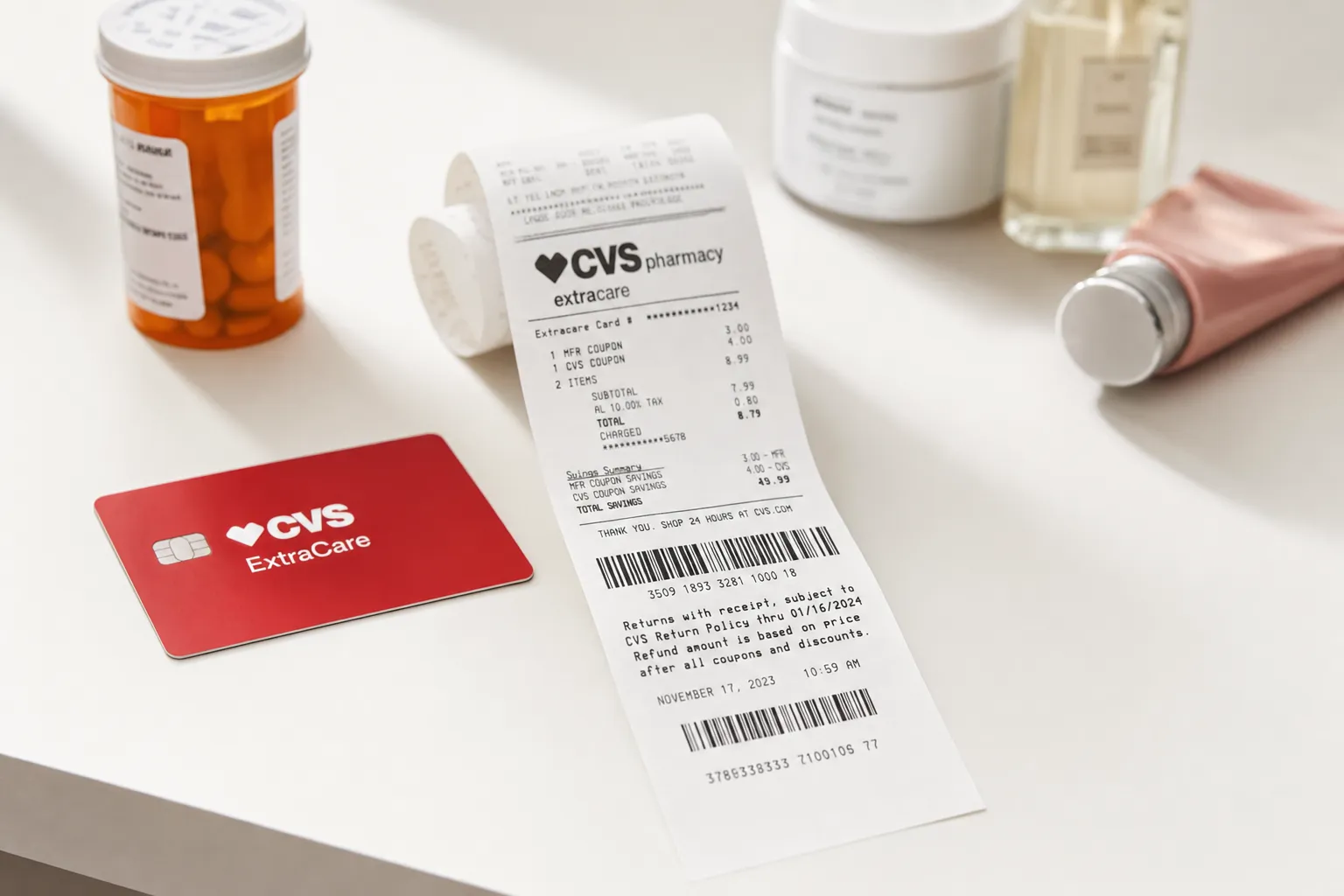
For itemized medical deductions over 7.5% of AGI: medical bills, prescription receipts, insurance copays. Pharmacy receipt templates and medical receipt templates follow the IRS-acceptable format.
Charitable Contributions
For any donation, keep a written acknowledgment from the charity. Cash donations under $250 need only a bank record or receipt. Donations of $250+ require a written acknowledgment from the charity stating the amount.
What to Do If You Lose a Receipt
Lost receipts are common. The IRS recognizes this and accepts secondary documentation in most cases:
- Request a duplicate from the vendor. Most retailers can reprint receipts for 6-12 months. Walmart, Amazon, Target all have systems to retrieve old receipts. Our Walmart receipt lookup guide walks through how.
- Use bank or credit card statements as secondary evidence. Combined with a written log of what was purchased, this often satisfies IRS reviewers.
- Maintain a contemporaneous log. If you cannot get a duplicate, write down the date, vendor, amount, and business purpose AS SOON AS POSSIBLE. The IRS gives more weight to logs written close to the event than recreated months later.
- Apply the Cohan Rule. Named after a 1930 tax court case, the Cohan Rule lets you estimate deductions when records are incomplete, provided you can show the expense was likely incurred. The estimate must be reasonable. This is a last resort, not a strategy.
For frequent lost-receipt situations, create a backup receipt using the receipt generator with accurate details from your bank statement. Label it as a recreated record in your notes.
IRS Audit — What Happens Without Receipts
If you are audited and cannot produce receipts, the IRS can disallow the deduction entirely. That means the expense gets added back to your taxable income, and you owe additional tax plus interest and potentially penalties.
What an Auditor Looks For
- Receipts that match deductions on your return
- Business purpose for each expense
- Consistency between bank statements, credit card statements, and receipts
- Patterns suggesting personal expenses claimed as business
Penalties for Missing Documentation
| Situation | Penalty |
|---|---|
| Disallowed deduction | Owe back tax + interest (typically 7-8% annually) |
| Substantial understatement (10%+ of tax owed or $5,000) | 20% accuracy penalty |
| Negligence or disregard of rules | 20% accuracy penalty |
| Fraud | 75% penalty + potential criminal charges |
Most audits do not reach the fraud level. The typical outcome of poor recordkeeping is disallowed deductions plus the 20% accuracy penalty. For a small business with $20,000 in disallowed expenses at a 25% tax rate, that is $5,000 in additional tax plus $1,000 in penalties.
How to Create IRS-Compliant Receipts
For transactions where the vendor did not provide a receipt, you have two options:
Option 1: Write One by Hand
Use a receipt book from any office supply store. Write down all 4 required IRS elements: date, vendor, description, amount. Both parties keep a copy. This is standard for cash transactions with handymen, contractors, and service providers.
Option 2: Generate One Digitally
The ReceiptEdit receipt maker creates formatted receipts with all IRS-required fields plus standard extras (tax breakdown, payment method, receipt number). Free, no signup, downloads as PDF. Use it for cash transactions, lost-receipt replacements, or business documentation. Service receipt templates, home services templates, and automotive templates match the format auditors expect.
For Issuing Receipts to Clients
If you are the one selling, use the invoice generator for formal billing or the receipt maker for point-of-sale confirmations. Either document satisfies IRS requirements for both you (the seller) and your client (the buyer). Our receipt vs invoice guide explains when to use which.
State-Level Receipt Requirements
Most states follow the federal IRS standards for income tax. Some states have additional requirements for sales tax receipts:
- California: Sellers must provide receipts showing the sellers permit number on taxable sales over $5
- New York: Receipts required for all transactions over $20
- Texas: No mandatory receipt rule, but receipts are required for sales tax exemption claims
- Florida: Receipts must show sales tax separately stated for taxable goods
Check your state department of revenue website for specifics. For multi-state businesses, comply with the strictest state requirements as your baseline.
FAQs About IRS Receipt Requirements
What are IRS receipt requirements for $75?
The IRS does not require receipts for business meals, lodging incidentals, and transportation expenses under $75 (Publication 463). For all other business expenses, keep receipts regardless of amount. The $75 threshold applies per individual expense, not per receipt total. You still need a written record (date, place, purpose, amount) even without a paper receipt.
How long do I need to keep receipts for taxes?
The IRS standard is 3 years from the filing date. Keep receipts for 6 years if you underreported income by 25% or more, indefinitely if you filed fraudulently or did not file at all, and as long as you own the asset plus 3 years for property records. In practice, 7 years of digital storage covers almost every scenario.
Are digital receipts accepted by the IRS?
Yes. Revenue Procedure 97-22 explicitly allows electronic storage. Phone photos, scanned PDFs, email receipts, and cloud-stored copies all qualify, provided they are clear, complete, and accessible. You can throw away paper originals after scanning. Thermal receipts fade within 3-6 months, so scan immediately.
What if I get audited without receipts?
The IRS can disallow deductions you cannot substantiate. Your options: request duplicate receipts from vendors (most retailers reprint for 6-12 months), use bank or credit card statements as secondary evidence with a written log, or apply the Cohan Rule (which allows reasonable estimates when records are incomplete). Plan on owing back tax plus 7-8% annual interest plus potentially a 20% accuracy penalty.
Do I need gas receipts for taxes?
Depends on which deduction method you use. If you take the standard mileage deduction (67 cents/mile in 2026), you do not need gas receipts. You need a mileage log showing business miles driven. If you use the actual expense method, you need gas receipts plus receipts for maintenance, insurance, registration, depreciation. Most small businesses use standard mileage because it is simpler.
Can I use a credit card statement instead of a receipt?
No, not by itself. A credit card statement shows you paid a vendor but does not describe what you bought. The IRS needs to see what the expense was for to determine deductibility. Pair the statement with another record (the actual receipt, an invoice, or a contemporaneous log noting the items and business purpose) to make it valid.
What is required on a business receipt for tax deduction?
Four required elements: date of transaction, vendor name, description of items or services purchased, and amount paid. Recommended additions: payment method (cash, check, last 4 of card), sales tax breakdown if applicable, and notes about the business purpose. Anything that meets these requirements satisfies the IRS — there is no required format or template.
Do I need to keep receipts for expenses under $75?
For business meals, lodging incidentals, and transportation, the IRS does not require receipts under $75. For all other categories, keep receipts regardless of amount. Even when not required, a receipt strengthens your case if audited. An auditor questioning a pattern of $50-$70 expenses with no documentation can disallow them collectively even if each is individually below the threshold.