Simple Sales Receipt Template
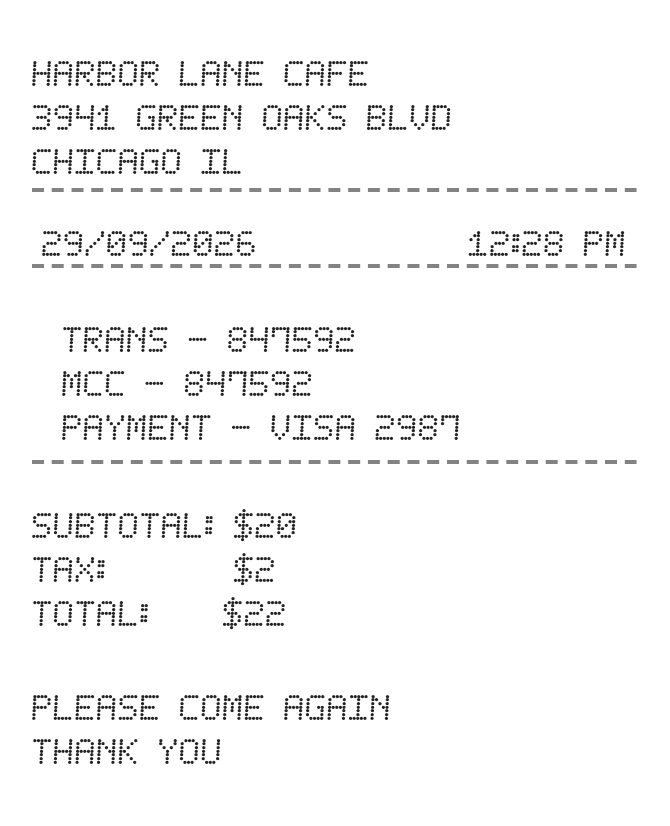
Create a compact sales receipt with the shop, transaction reference and payment details. Enter the sale price and tax amount to update the total.
Last updated
A short receipt for the payment total
This sales receipt template keeps the layout brief: shop details at the top, transaction and payment references below, then subtotal, tax and total. It works when you want a summary of the sale amount. There is no item table in this layout; use the itemized template when the record needs a product breakdown.
What a general sales receipt should record
A general sales receipt is the basic proof that a sale happened: who sold, when, how much and how it was paid. The IRS lists sales slips, invoices, receipts and cash register tapes among the supporting documents a business should keep, because they back up the entries in its books and on its tax return. Documents that show gross receipts include cash register tapes, receipt books, invoices and credit card charge slips. For a buyer, the same slip supports a business expense, but the IRS notes that proof of payment alone does not establish a deduction, so keep the sales receipt or invoice that shows what the cost was for.
Sales tax rules can also shape the receipt. In Washington, state law says the tax a seller collects must be stated separately from the selling price on any sales invoice or other instrument of sale, with an exception for vending machine sales. Alabama's sales tax rule says the invoice, sales slip or receipt shall separately state the tax charged, and if it isn't, the state presumes no sales tax was collected and taxes the gross receipts. Rules differ by state, so a general sales receipt that shows the price, the tax amount and the total on separate lines is the clearest record in most places.
Keeping and replacing a general sales receipt
The IRS says to keep records that support income or a deduction until the period of limitations for that return runs out, which is generally 3 years after filing. It is 6 years if more than 25% of gross income was left off the return, and 7 years for a bad debt or worthless securities claim. Scanned or electronic copies are acceptable if the system can store, index and reproduce them in legible form. If a buyer loses a sales receipt, ask the seller for a copy from their records; a card statement shows the amount, payee and date but not what was bought.
Fill in the compact sales slip
| Section | Details |
|---|---|
| Shop | Set the business name and address shown on the receipt. |
| Date and time | Use the date and time of the sale. |
| References | Enter the transaction ID and merchant reference. |
| Payment | Edit the payment type and card digits where relevant. |
| Amounts | Enter the sale price and a tax amount in money, not a tax rate. |
Related receipt guides
Tax Amount is a money value
- The editor adds Price and Tax Amount. A price of 20 with tax of 2 gives a total of 22; entering 10 in Tax Amount adds 10, rather than calculating ten percent.
- Check the payment reference and thank-you message before exporting. This receipt records the values you type and does not charge a card or retrieve a shop transaction.
FAQs
Official sources
- IRS - Publication 583, Starting a Business and Keeping Records
- Washington Legislature - RCW 82.08.050, collection of retail sales tax
- Washington Department of Revenue - Collection of retail sales tax
- Alabama Department of Revenue - Rule 810-6-4-.20