Blank Hotel Receipt Template
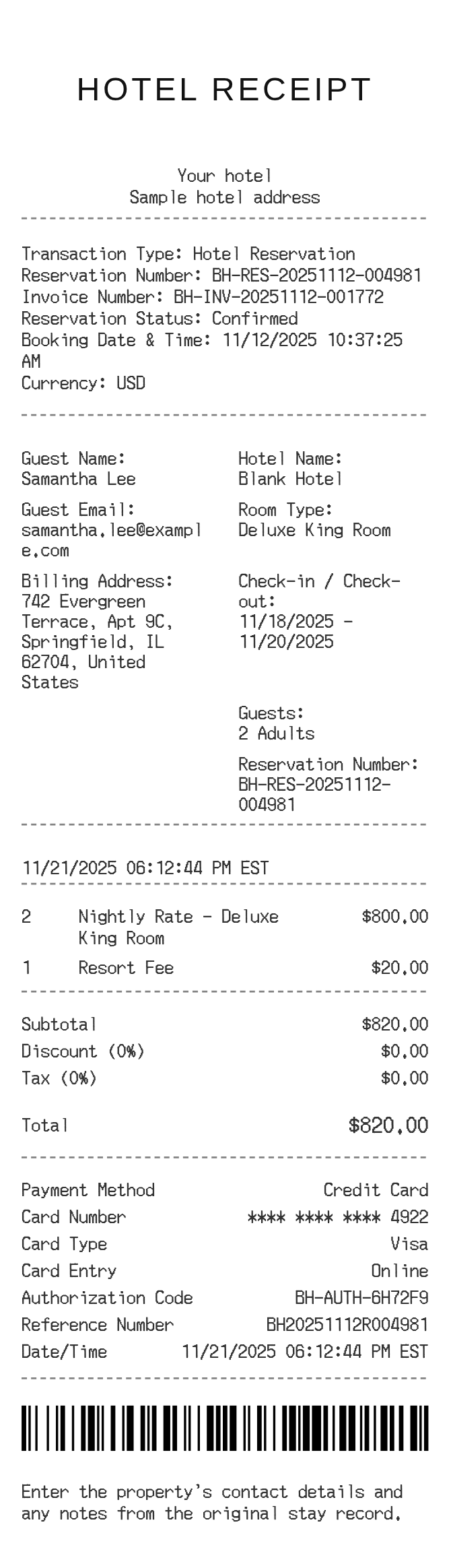
Start with an editable hotel example and replace the property, guest and room charges. Add your own sections, review the total, and save the receipt.
Last updated
Set up a receipt for your own property
This unbranded hotel layout starts with sample information to show where the guest, room, stay and payment details go. Replace those examples with your own records. The section controls let you add, remove or rearrange information, so a short room-only stay does not need the same details as a visit with extra services.
What a hotel receipt should show
A hotel receipt, often called a folio, is the itemized bill a guest gets at checkout. It normally identifies the property and its address, the guest, the room and the arrival and departure dates, then lists room nights, taxes and any other charges posted to the room, followed by payments. For business travel, IRS Publication 463 (the edition for 2025 returns) says a hotel receipt is enough to support the expense if it shows the hotel's name and location, the dates of the stay, and separate amounts for charges such as lodging, meals and telephone calls. The publication's exception for expenses under $75 does not apply to lodging, so even a cheap night needs a receipt.
Fees and taxes deserve their own lines. Since May 12, 2025, the FTC's Rule on Unfair or Deceptive Fees has required any business advertising short-term lodging, including hotels, motels, inns, short-term rentals and vacation rentals, to show the total price, with every mandatory fee included, more prominently than other pricing. Government charges and optional extras may be left out of that total, but they must be disclosed before the guest agrees to pay. Lodging taxes are set by states and local governments. In Texas, for example, the state hotel occupancy tax is 6 percent of the room cost on rooms costing $15 or more a day, and cities and some counties add a local hotel tax.
Issuing and keeping a hotel receipt
If you run a small hotel, inn or rental, give each guest an itemized receipt at checkout and keep a copy. Put each nightly rate on its own line when rates change, show room tax apart from the room charge, and list parking, meals or other services as separate amounts so a business traveler can claim them. Record each deposit, payment and refund against the stay so the receipt shows a clear final balance.
Guests should file the hotel receipt with the booking confirmation. IRS Publication 463 says records supporting a deduction generally must be kept for 3 years from the date the return is filed, and an early return counts as filed on its due date. For a stay at a branded hotel, ask that hotel for its original folio.
Build the record around the stay
| Section | Details |
|---|---|
| Header | Property name, address and optional logo |
| Guest | Guest and reservation details in editable label/value rows |
| Charges | Nightly rates or services using quantity and unit price |
| Summary | Discount, tax and payment references |
| Notes | Optional message and barcode sections |
Related receipt guides
Replace the examples and check the totals
- Enter your property and guest information.
- Use a separate row for each rate or service.
- Check the discount and tax percentages against your own records.
- Remove unused sections and inspect the preview before export.
FAQs
Official sources
- IRS - Publication 463, Travel, Gift, and Car Expenses
- eCFR - 16 CFR Part 464, Rule on Unfair or Deceptive Fees
- Texas Comptroller - Hotel Occupancy Tax