Equipment Rental Receipt Generator
Record the hired equipment, rental period and return date. Enter rental and delivery charges, then check the contract, renter and payment details.
Last updated
Keep hire dates separate from the charges
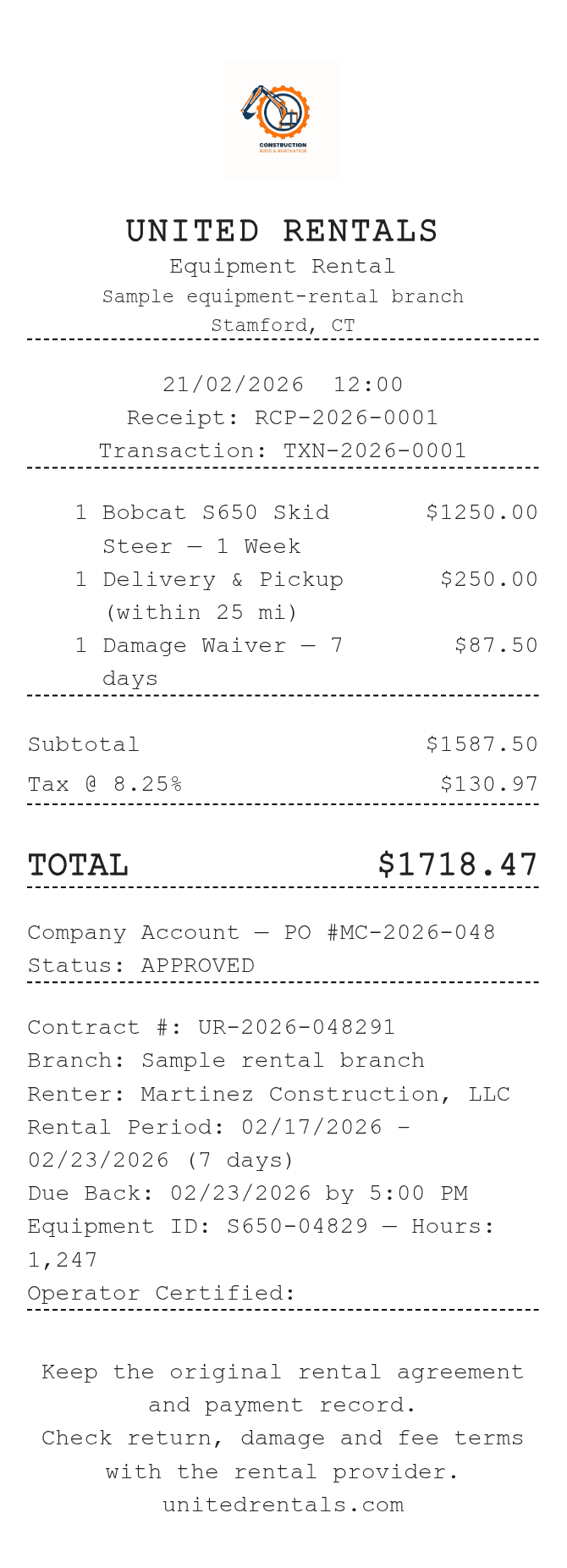
This equipment-rental template includes a contract number, renter, rental period, due-back entry and equipment ID. Those fields describe the booking. They do not calculate days, late fees or operating hours; the item amounts determine the receipt subtotal.
What an equipment rental receipt should record
An equipment rental receipt works best as a record when it ties the payment to one contract and one piece of equipment. The IRS says supporting documents for a business expense should identify the payee, the amount paid, proof of payment and the date incurred, and should describe the item or service. For a rental, that usually means the rental company and branch, the contract reference, the equipment description or ID, the hire period and return date, and each charge on its own line: the rental itself, delivery or pickup, any damage waiver, fuel or cleaning fees, and tax. The IRS also notes that a combination of documents may be needed, such as the rental agreement plus the payment receipt.
Separate lines also matter for sales tax, because states treat rental charges differently. Texas is a clear example. Under 34 Tex. Admin. Code 3.294, receipts from leasing equipment without an operator are taxable. When equipment comes with an operator for a single charge, the deal is presumed to be a service and no tax may be charged unless that service is taxable. If the equipment and operator are billed separately, the equipment charge is taxable and the operator charge generally isn't. Damage waiver fees and transportation charges the rental company bills you are taxable in Texas, while transportation billed directly to you by a third-party carrier isn't.
Using equipment rental receipts for business deductions
IRS Publication 334, for 2025 returns, says rent is deductible as a business expense only when it's for property you use in your business. If you have or will receive equity in or title to the property, the payments aren't deductible as rent. Rent paid in advance is deductible only for the part that covers use during the tax year, with the rest spread over the period it applies to.
Sales tax paid on a rental is treated as part of the cost, so it follows the rental charge. Keep the contract, the final invoice after the return and proof of payment together, since late-return or damage charges can change the amount after the first receipt.
Rental details and charges
| Section | Details |
|---|---|
| Hire | Contract, branch and renter |
| Equipment | Description and equipment reference |
| Dates | Rental period and due-back text |
| Charges | Complete rental, delivery or other row amounts |
| Payment | Method and payment-reference text |
Related receipt guides
Check the dates and charges together
- Replace the rental business and renter details.
- Enter the equipment and hire period.
- List complete charges and review the tax setting.
- Check return instructions and payment information before export.
FAQs
Sources and references
- IRS - What kind of records should I keep
- IRS - Publication 334, Tax Guide for Small Business (2025 returns)
- 34 Tex. Admin. Code 3.294, Rental and Lease of Tangible Personal Property (Cornell LII)