Storage Unit Receipt Generator
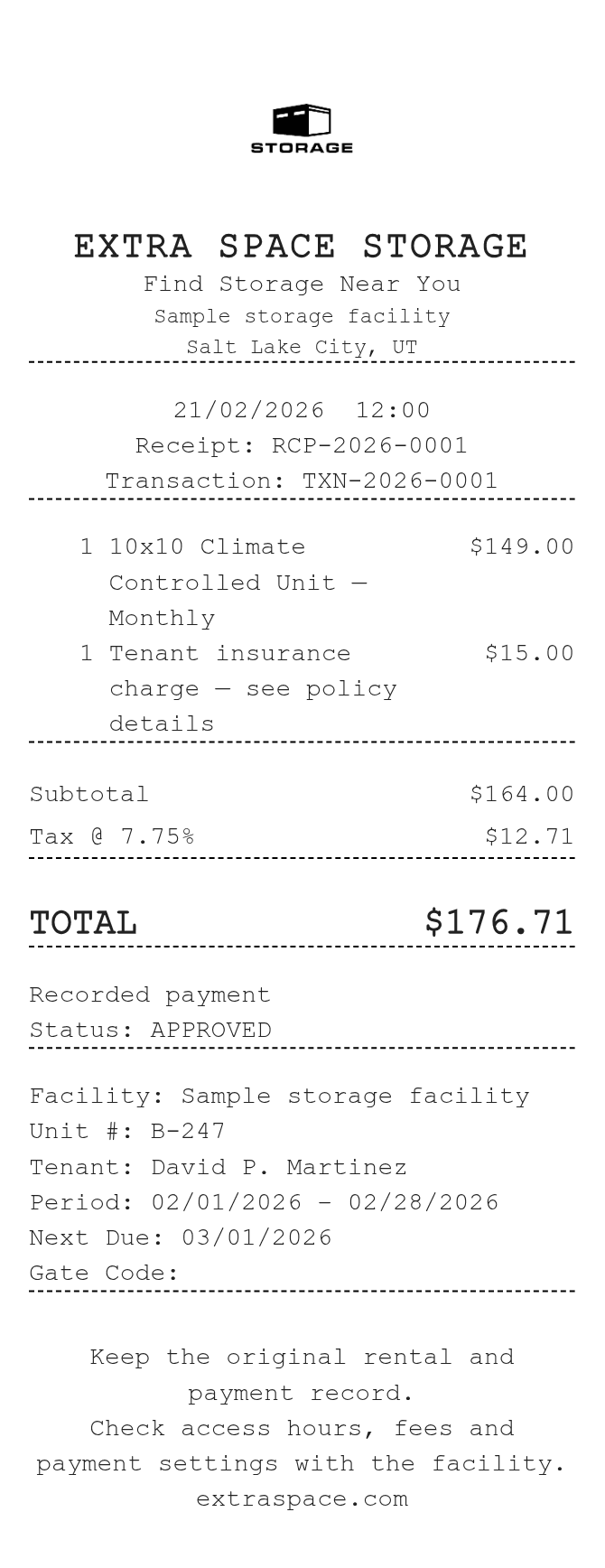
Enter the facility, unit and tenant, then list the rental and other charges. Review the period, next-due note and payment details before downloading.
Last updated
Identify the unit and rental period
A storage receipt should distinguish the unit being paid for from other rentals at the same facility. This layout has separate unit, tenant, period and next-due entries. Describe unit size or climate control in the rental row when those details help identify the charge.
Why storage unit rent receipts matter
A storage unit receipt is the tenant's proof that a rental period was paid, and that proof can matter quickly. In California, the Self-Service Storage Facility Act gives the facility owner a lien on everything stored in the unit for rent, labor, late payment fees and other charges due under the rental agreement. If any part of the rent or other charges stays unpaid for 14 consecutive days, the owner may send a preliminary lien notice. That notice must include an itemized statement of the sums due and the dates they became due, and it must give at least 14 days after mailing to pay before access ends.
If the balance is still unpaid, the owner can deny access, enter the unit and move the property to safekeeping, and a later notice of lien sale must give at least another 14 days. California also requires every storage rental contract to be in writing and to state that the property can be sold if rent or charges stay unpaid for 14 days. Lien notices may go by email only if the rental agreement allows it and the tenant signed to consent. A receipt for each payment, showing the unit, period and amount, makes any disputed balance easier to check.
What to put on a storage unit receipt
List the facility name and address, the tenant, the unit number, the rental period covered, the payment date and method, and each charge on its own line, such as rent, late fees or insurance. If you rent storage for a business, the IRS says supporting documents should identify the payee, the amount paid, proof of payment, the date incurred and a description showing the amount was a business expense.
Keep the receipts with your rental agreement. The IRS generally tells taxpayers to keep records for 3 years from filing, with longer periods in some situations.
Unit and payment information
| Section | Details |
|---|---|
| Facility | Business details and location |
| Unit | Unit number and tenant |
| Period | Rental-period and next-due text |
| Charges | Complete rental and other row amounts |
| Payment | Method and payment-reference notes |
Related receipt guides
Check rental details before saving
- Replace the facility and tenant examples.
- Enter the unit number and period covered.
- Describe each charge and review the tax setting.
- Check next-due and payment notes, removing access details you do not need.
FAQs
Official sources
- California Business and Professions Code, Chapter 10 (Self-Service Storage Facilities), section 21700 and following
- IRS - What kind of records should I keep
- IRS - How long should I keep records