Diesel Receipt Generator
Record the diesel charge with pump, fuel grade, driver and vehicle references. Enter the full line amount, then check the displayed volume, unit price and tax.
Last updated
Keep the diesel charge and fleet references together
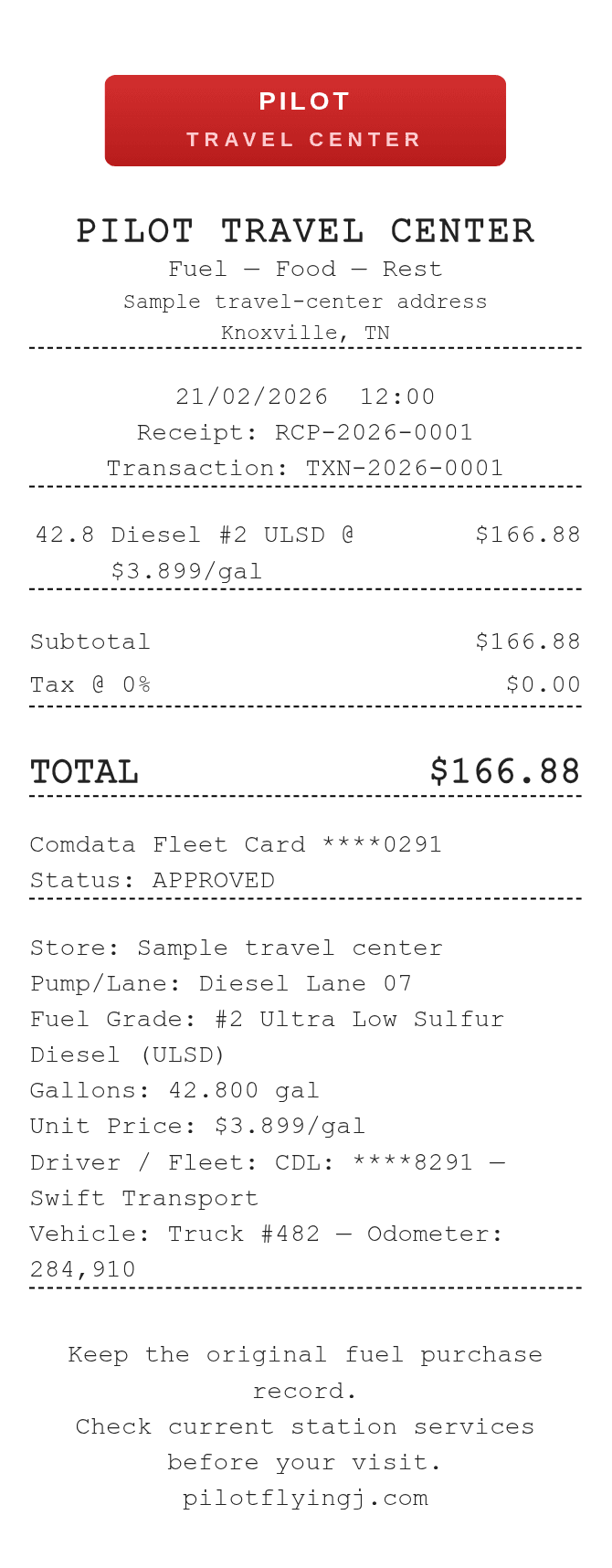
The diesel sample includes space for a pump or lane, fuel grade, volume, price, driver or fleet reference, and vehicle details. Its item list can also hold a separately charged purchase. The volume and price reference fields describe the transaction; the item’s Line amount supplies the actual charge.
What a diesel fuel receipt should show
If you run a qualified vehicle under the International Fuel Tax Agreement (IFTA), fuel receipts back up the tax-paid gallons on your quarterly return. Colorado's IFTA recordkeeping page, for example, says fuel records must contain the date of purchase, the seller's name and address, the gallons or liters bought, the fuel type, the price per gallon or liter or the total sale, the unit number of the vehicle fueled, and the purchaser's name. For card lock or fleet card systems, the state must be able to identify which qualified vehicle in your fleet was fueled.
Records supporting reported miles and fuel must be kept for four years. On the federal side, IRS Publication 510 sets the excise tax on diesel fuel at $0.244 per gallon, while dyed diesel is subject only to the $0.001 per gallon LUST tax. Off-highway business use, such as fuel for generators, compressors, forklifts or bulldozers, is one of the nontaxable uses for which an ultimate purchaser may claim a credit or refund. For a business vehicle, IRS Publication 463 lists gas among actual car expenses, so diesel receipts matter if you don't use the standard mileage rate.
Keeping diesel receipts for fleet and tax records
Before leaving the pump, check that the diesel receipt shows the station's name and address, the gallons, the fuel type and the price or total, since an IFTA record without those details is incomplete. Colorado recommends keeping fleet cards vehicle-specific and identified by unit number so each fueling can be matched to a truck. File the receipts with the trip records for the same quarter, because the four-year retention period covers both fuel and mileage records.
Fuel and vehicle details
| Section | Details |
|---|---|
| Station | Name, location, contact and store reference |
| Fuel | Pump or lane, grade, gallons and unit-price text |
| Vehicle | Driver or fleet reference and vehicle notes |
| Items | Description, displayed quantity and full charge |
| Totals | Subtotal, entered tax and payment information |
Related receipt guides
Check that the reference values agree
- Replace the sample station, driver and vehicle information.
- Enter the fuel volume and unit-price references.
- Set the complete fuel Line amount and any additional rows.
- Review tax and payment before saving PDF or PNG.
FAQs
Official sources
- Colorado Department of Revenue - IFTA recordkeeping
- IRS - Publication 510, Excise Taxes
- IRS - Publication 463, Travel, Gift, and Car Expenses