Vet Receipt Generator
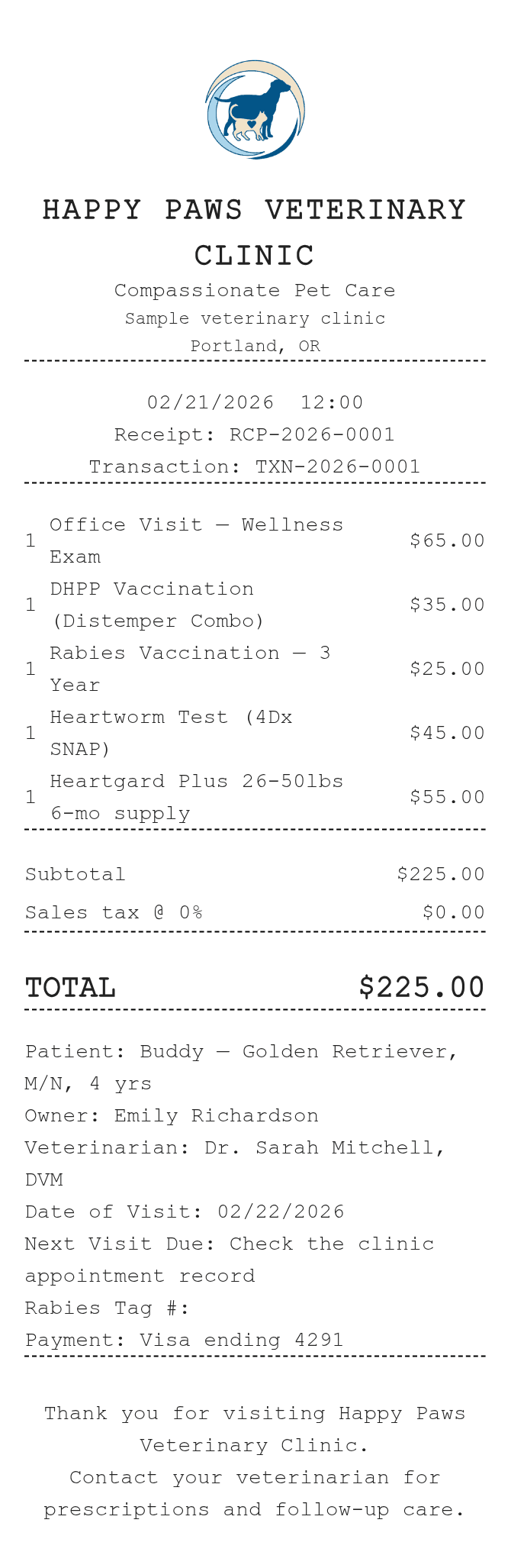
List the pet’s visit charges and add owner, veterinarian and appointment details. Review the full item amounts, tax setting and payment note before saving the receipt.
Last updated
Keep the pet and owner attached to the itemized visit
The vet receipt layout provides separate Patient and Owner fields, followed by the veterinarian, visit date, next-visit note and rabies-tag reference. The service list can contain consultation, treatment or product charges. A future appointment or vaccination reference is information you enter, not a recommendation calculated by the editor.
Why a vet receipt should list each charge separately
Sales tax on a vet bill depends on the state and on what each line is for, so an itemized vet receipt is easier to check. New York's Tax Bulletin ST-930 is a clear example. It says no sales tax is due on a licensed veterinarian's health care services for pet or farm animals, including diagnosis and treatment, hospitalization needed for medical reasons, and clipping done as part of treatment. Boarding and routine grooming are taxable. A cat's annual checkup and shots are exempt, while boarding a bird during the owners' vacation is taxed.
The same bulletin covers products sold at the clinic. In New York, no sales tax is due on items designed for the care of domestic animals, such as drugs, medicines, bandages, leashes, collars, pet beds, and flea and tick products. Tax applies when a vet sells an animal, other than a guide, hearing or service dog, and on items unrelated to animal care, such as mugs, T-shirts or calendars. Owners of guide, hearing and service dogs are exempt buyers, and they give the vet an exemption certificate.
Using a vet receipt for federal tax records
IRS Publication 502 says you generally can't include veterinary fees in medical expenses. The exception is a guide dog or other service animal that assists a person who is visually impaired, hearing disabled or has other physical disabilities. Costs of buying, training and maintaining that animal, including food, grooming and veterinary care, can count. Only the part of total medical expenses above 7.5% of adjusted gross income is deductible on Schedule A.
If a vet receipt supports a deduction, the IRS says to keep it until the period of limitations for that return ends, which is generally 3 years.
What the veterinary layout includes
| Section | Details |
|---|---|
| Clinic | Name, address and receipt reference |
| Patient | Pet description and owner name |
| Visit | Veterinarian, visit date and optional follow-up note |
| Items | Description, quantity and full amount |
| Payment | Payment note and optional card details |
Related receipt guides
Review the pet’s visit record
- Replace the clinic, pet and owner examples.
- List the services and products with the complete amount for each row.
- Review Sales tax %; it applies to the whole subtotal.
- Check payment and any follow-up note against the clinic record before export.
FAQs
Official sources
- New York State Department of Taxation and Finance - Tax Bulletin ST-930, Veterinarians
- IRS - Publication 502, Medical and Dental Expenses
- IRS - How long should I keep records?