Liquor Store Receipt Generator
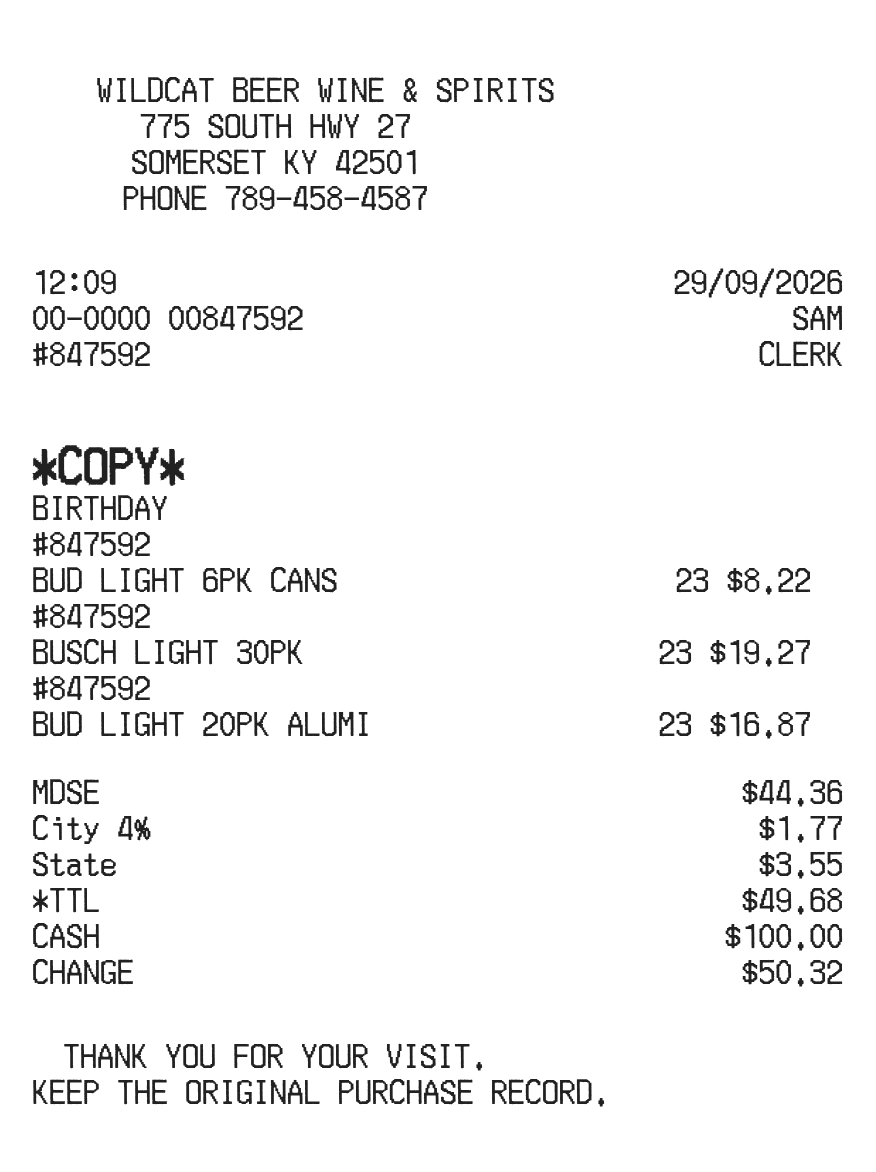
List bottles, cases or multipacks with quantities and prices. Edit store and cashier details, then review the separate city and state tax settings and payment total.
Last updated
Distinguish bottles from packs in the item list
The liquor-store layout includes an item code, description and extra description for each product. State a bottle size or pack count in the description, then enter how many of that unit were purchased. Item Price is multiplied by Quantity to calculate the line charge.
Why liquor store receipts show extra tax lines
Alcohol often carries taxes beyond ordinary sales tax, and some states require them to appear on the liquor store receipt. Washington is the clearest example. For spirits sold in their original package to the general public, the Department of Revenue lists a spirits sales tax of 20.5% of the selling price and a spirits liter tax of $3.7708 per liter. The seller must separately state the spirits taxes, though the two may be combined into a single Spirits Taxes amount. Shelf prices are presumed to exclude these taxes unless the amount is clearly identified, and the words tax included are not enough.
Minnesota works differently. Under Minnesota Statutes section 295.75, liquor retailers owe a liquor gross receipts tax of 2.5% of gross receipts from retail liquor sales. The retailer may, but is not required to, collect it from the buyer. If it is separately stated on the receipt or invoice, that amount is left out of the price used for the general sales tax. So two receipts for the same bottle in different states can show very different tax sections, and a correct receipt follows the rules of the state where the sale happened.
Using a liquor store receipt for business records
If a bottle is a business gift, the receipt supports the deduction, but the limit is tight. IRS Publication 463 (2025) allows no more than $25 for business gifts to each person in a tax year. Packaged food or beverages you give a customer to use later are treated as a gift, not entertainment. Incidental costs such as gift wrapping generally don't count toward the $25.
Publication 463 also says you generally need documentary evidence, such as receipts, canceled checks or bills, to support expenses, with an exception for most expenses other than lodging under $75. For a gift, the publication lists the cost, date and description of the gift among the records to keep, along with the business purpose and relationship.
Store and checkout details
| Section | Details |
|---|---|
| Store | Business name, address and telephone |
| Checkout | Register, cashier, invoice reference and date/time |
| Products | Code, description, quantity and unit price |
| Taxes | Separate city and state percentages |
| Payment | Method, cash tendered and calculated change |
Related receipt guides
Review units, tax and tendered cash
- Replace the store, cashier and invoice examples.
- Make bottle or pack sizes clear in each description.
- Set city and state tax percentages from the record you are preparing.
- Check the payment and closing message before download.
FAQs
Official sources
- Washington Department of Revenue - Spirits sales
- Minnesota Statutes section 295.75 (liquor gross receipts tax)
- IRS Publication 463, Travel, Gift, and Car Expenses (2025)