Tooth Fairy Receipt Template for Australia
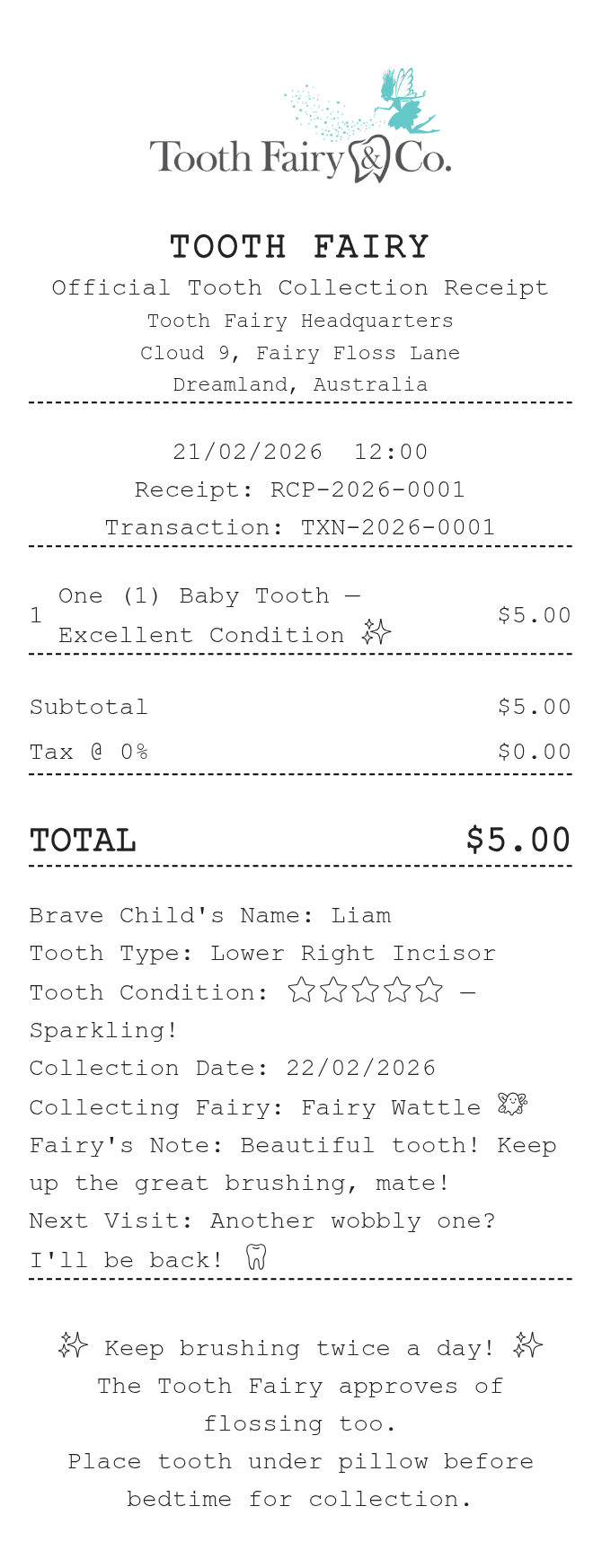
Create an AUD tooth-fairy keepsake with your child’s name, the collection date and a note from the fairy. Set the reward and preview the finished receipt.
Last updated
A tooth-fairy visit with an Australian-dollar reward
The Australian version has room for more than a tooth and an amount. You can add the collection date, the collecting fairy’s name, a personal comment and a hint about the next visit. The sample’s playful addresses and names are editable, so you can make the keepsake fit the story your child knows.
When a tooth fairy receipt fits a child's milestones
A tooth fairy receipt is a keepsake for one of the first big childhood milestones. According to Pregnancy, Birth and Baby, a parenting information service funded by the Australian Government, children are usually born with 20 baby teeth, which start coming through at around 6 months. Most children have the full set by age 2 to 3, and adult teeth begin replacing baby teeth at around age 6. That can mean several years of wobbly teeth, and a dated receipt for each one records which tooth came out and when.
The same service notes that baby teeth do more than fill a gap. They help guide the permanent adult teeth into the right place in the jaw, and tooth decay is the major reason children lose teeth before they are due to fall out naturally. A fairy's note can carry a gentle health message alongside the reward. From 18 months to 5 years, children should brush twice a day with a small pea-sized amount of fluoride toothpaste and spit it out, and by 9 years of age a child should be able to brush and floss on their own twice a day.
Pairing the keepsake with a dental check
A lost tooth is a good prompt to book a check-up. Pregnancy, Birth and Baby advises a first dental visit when the first tooth appears or by the first birthday, then regular check-ups, and a visit as soon as you suspect a problem.
Some families can use the Child Dental Benefits Schedule (CDBS), which gives a capped benefit over a 2 calendar-year period for eligible children aged 0 to 17. There is no need to apply or register. Services Australia can confirm the remaining balance.
Make the visit personal
| Section | Details |
|---|---|
| Child and tooth | Name, tooth type and condition |
| Collection | A collection date entered separately from the receipt date |
| Fairy | Collector name and a personal note |
| Reward | An amount in Australian dollars |
| Next visit | A short hint or message for another wobbly tooth |
Related receipt guides
Check the two dates before printing
- Enter the child’s name and the tooth details.
- Set Collection Date and the receipt date to the dates you want; changing one does not update the other.
- Add the fairy’s note and reward. Keep the tax rate at zero for the keepsake.
- Review the message and total, then download the receipt as a PDF or PNG.
FAQs
Official sources
- Pregnancy, Birth and Baby - Baby teeth
- Pregnancy, Birth and Baby - Looking after your baby or child's teeth
- Pregnancy, Birth and Baby - Dental benefits for kids (CDBS)